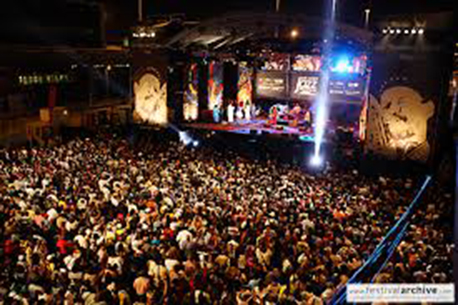
Johannesburg is expected to reap substantial economic benefits from a host of international and local big-ticket events currently under way or to be staged in the city over the next three months.
Between now and the end of December this year, the city is hosting no fewer than 12 high-profile events – from music shows to wine and beer festivals – which will draw in thousands of people from all over the country and abroad.
Some of the events to be staged in the city within the next three months include the World Orchid Conference, the increasingly popular Arts Alive Festival, and the Standard Bank Joy of Jazz, which this year is projected to attract more than 30 000 jazz enthusiasts over three days – from 25-27 September.
The Baba Indaba, to be staged from 24 to 26 October, is expected to draw in more than 25 000 visitors, while the Soweto Festival – to be held from 26 to 28 September – will attract no fewer than 30 000 people.
Another big drawcard is Winex, which this year is expected to attract 12 000 wine connoisseurs when it is staged between 29 and 31 October. The Soweto Fashion Week – to be held from 26-29 November – will be attended by no fewer than 10 000 fashion lovers.
Other events that will be held over the next three months include:
The Joburg Beer Festival (26-28 September);
The Joburg City Festival (2-5 October);
DISCOP-Africa (5-7 November);
Sansui Summer Cup (29 November); and
Mandela Ride and Tour (30 November to 4 December).
The World Orchid Conference, which runs from 10 September to 14 September, is expected to draw in more than 100 000 people.
Johannesburg’s MMC for Economic Development, Councillor Ruby Mathang says hosting events of that magnitude will have direct and positive economic and development impact on the city and “all who work and play within its boundaries”
“Large business events often attract between 500 and 1 000 international registrants, who generally stay for between 14 and 19 days, with a direct or indirect contribution to the tourism value chain, including accommodation, restaurants, tourist attractions and transport services,” says Mathang.
“Business tourism creates an ideal leveraging point to promote the city, not only as a premier destination for business (as the continent’s financial and commercial hub) but also as an all-year-round destination for leisure, lifestyle, sports and mega-events and, even more importantly, as a centre for trade development and investment purposes.”
He says Johannesburg’s visitor numbers will again spike later this month with the return of the country’s premier jazz festival. The popular Standard Bank Joy of Jazz Festival, which was held in Newtown, will for the next five years be staged at the Sandton Convention Centre.
The Clr believes the change of venue will accommodate the ever-increasing audience numbers.
He says events of this size boost local economic tourism as they attract a high number of domestic, African and international travellers.
“Attracting large international conferences and events to the city facilitates the immediate flow of trade relations between Johannesburg and other cities, countries and industries. Moreover, there is an exchange of professional and intellectual capital and expertise, which comes about as a result of hosting each event in Joburg,” adds Mathang.
According to the Master Card Global Destination Cities Index released in June last year, Johannesburg was ranked the most popular destination in Africa, with a projected 2.54 million international visitors.
Despite a marginal 5.5% increase in international visitor numbers from 2012, Johannesburg’s substantial 53.6% growth in international visitors from 2009 to 2013 has propelled it into the Index’s top 20 fastest growing cities globally.
The city ranks tops in Africa in terms of international visitor spending, with $2.7 billion estimated to have been injected into the city last year, a 1% increase on 2012’s expenditure.
Guided by economic development objectives of the Growth and Development Strategy 2040, the City’s mission is to continue positioning Johannesburg as one of the world’s leading cities, an all year-round leading business and events destination, and a vibrant, cosmopolitan centre for lifestyle, leisure, heritage, the arts, culture and entertainment.
This is aimed at ensuring shared and sustainable economic growth in the city, stimulating a vibrant second economy as well as the tourism sector.
Visitors to big-ticket events also benefit from the local tourism scene, which has boomed over the past 20 years and has seen an impressive increase in the number of visitor attractions, precincts, museums and sites highlighting Johannesburg’s complex and fascinating story. These include the Origins Centre, Hector Pietersen Memorial and Museum, Montecasino and the SAB World of Beer.
“The fact that Johannesburg is the most visited city on the African continent needs to be used to promote its appeal as a popular destination for business and leisure to attract more visitors. This, in turn, will pass benefits down the entire value chain for business and leisure tourism stakeholders, enabling us to grow the economy on many different levels – from the formal industry right down to SMMEs in our very diverse communities,” says Mathang.

