With no means to further their studies, Darion Petersen and Shaquitte Essack didn’t know what to do with their lives shortly after matriculating.
Their fortunes were turned around when they met Gladness Boikanyo, the City’s Manger for Urban Agriculture, who introduced them to hydroponic gardening, a method of growing plants without soil by using mineral nutrients dissolved in water.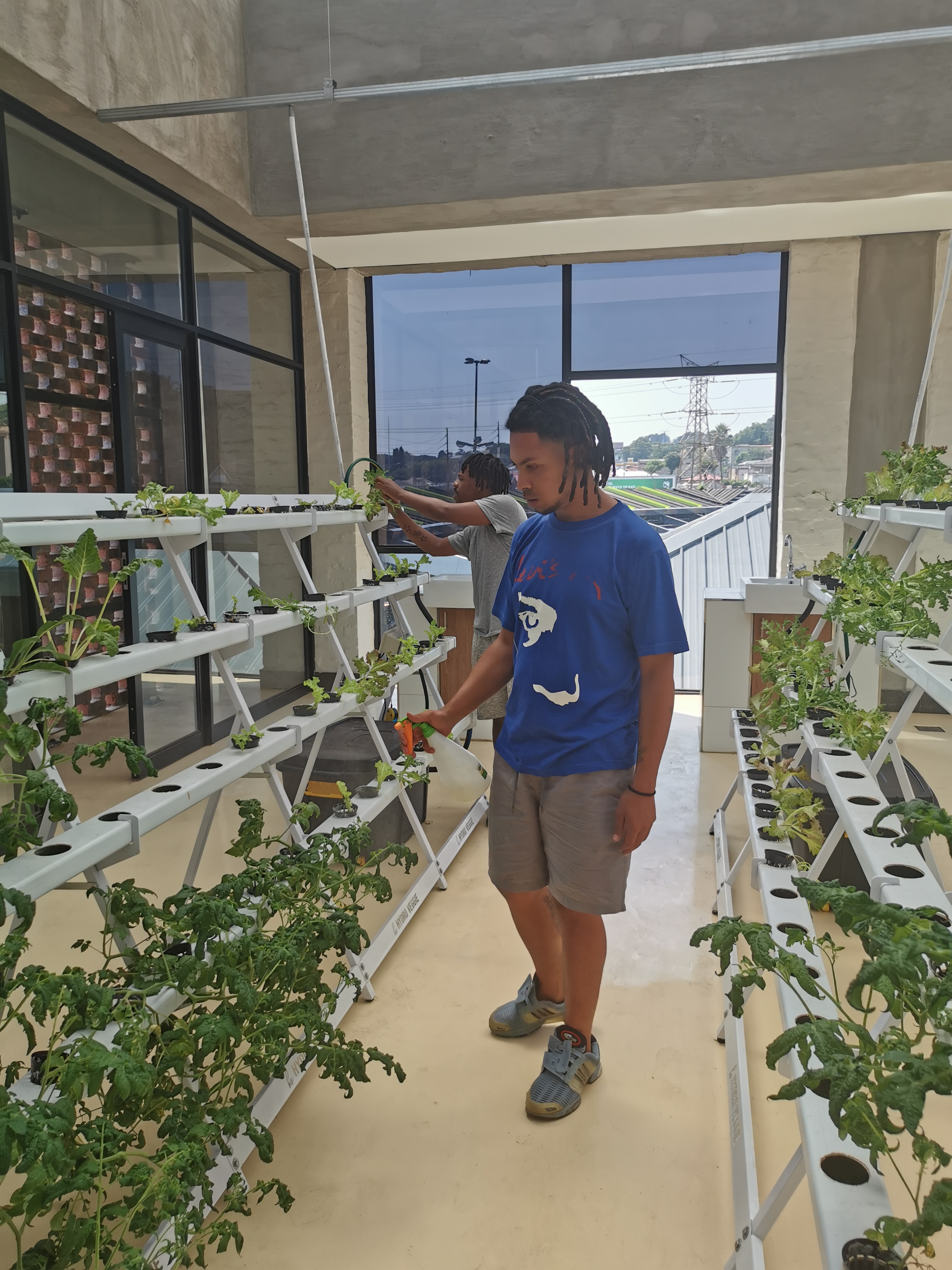
Petersen and Essack live in Westbury, west of Johannesburg. Their community is well known for being plagued by various social ills, including gangsterism and drug abuse, something they both agree needs the urgent attention of law enforcement authorities.
“Coming to the Westbury Transformation Development Centre (WTDC) every day to plant has given us a purpose bigger than ourselves. We want to be active members of society and contribute positively to this county’s economy,” Essack explains.
The Department of Social Development’s food security programme uses the WTDC to teach residents of Westbury hydroponic farming, helping them grow their own plants and vegetables to help fight poverty and malnutrition.
The WTDC offers community members social services, including sports and recreation, early childhood development, old age care, retail, a bakery and sewing rooms. Last year, the centre designed by award winning architectural firm, Ntsika Architects emerged as the winner of the Architecture Master Prize (AMP) Awards at the Guggenheim Museum Bilbao in Spain.
Both Petersen and Shaquitte specialise in planting tomatoes, spinach, lettuce and carrots, which they sell to community members and schools. They say in future they want to upscale their production so they distribute to big markets and national retailers.
Their dream is to establish themselves as commercial farmers with the aim to create employment for other young people in their community. “If it wasn’t for the City of Joburg I don’t know what we would be doing with our lives, probably being involved in drugs and gangsterism which are some of the things our peers are doing,” they explain.
Petersen says most young people don’t believe they are into farming because they expect to see them dirty and worn out.
“We are changing the face of farming and we would like more young people to be involved. That’s why we even go to school and educate learners about farming and help them start gardens at schools and their homes.”
Boikanyo says most young people are not interested in farming because the first thing that comes to their minds is that they don’t want to be seen dirty or standing under the sun all day. “Things are changing,” she says.
She adds that some of the advantages of hydroponic gardening is that it uses less water and can be done on rooftops or indoors for those who don’t have land or space. It also reduces greenhouse emissions.
Written by Takalani Sioga

