Page Content
As South Africa observes Disability Rights Awareness Month, the Johannesburg Development Agency (JDA) is highlighting the role of inclusive urban infrastructure in enabling persons with disabilities to participate fully in the social, recreational and economic life of the city.
For Johannesburg, inclusive infrastructure means considering the diverse needs of residents throughout the planning, design and implementation of public environment upgrades. Accessibility must be built into projects from the outset, rather than treated as an afterthought once construction is complete.
Recognising that accessible transport is essential to participation in city life, the JDA has completed the Universal Design Access Plan on behalf of the City of Johannesburg's Transport Department.
Developed between January 2025 and June 2026, the plan assessed accessibility across public transport services and facilities, including the Rea Vaya Bus Rapid Transit (BRT) system, Metrobus and other transport operators. Research, facility audits, stakeholder engagement and customer satisfaction surveys helped to identify the barriers experienced by passengers with different access requirements.
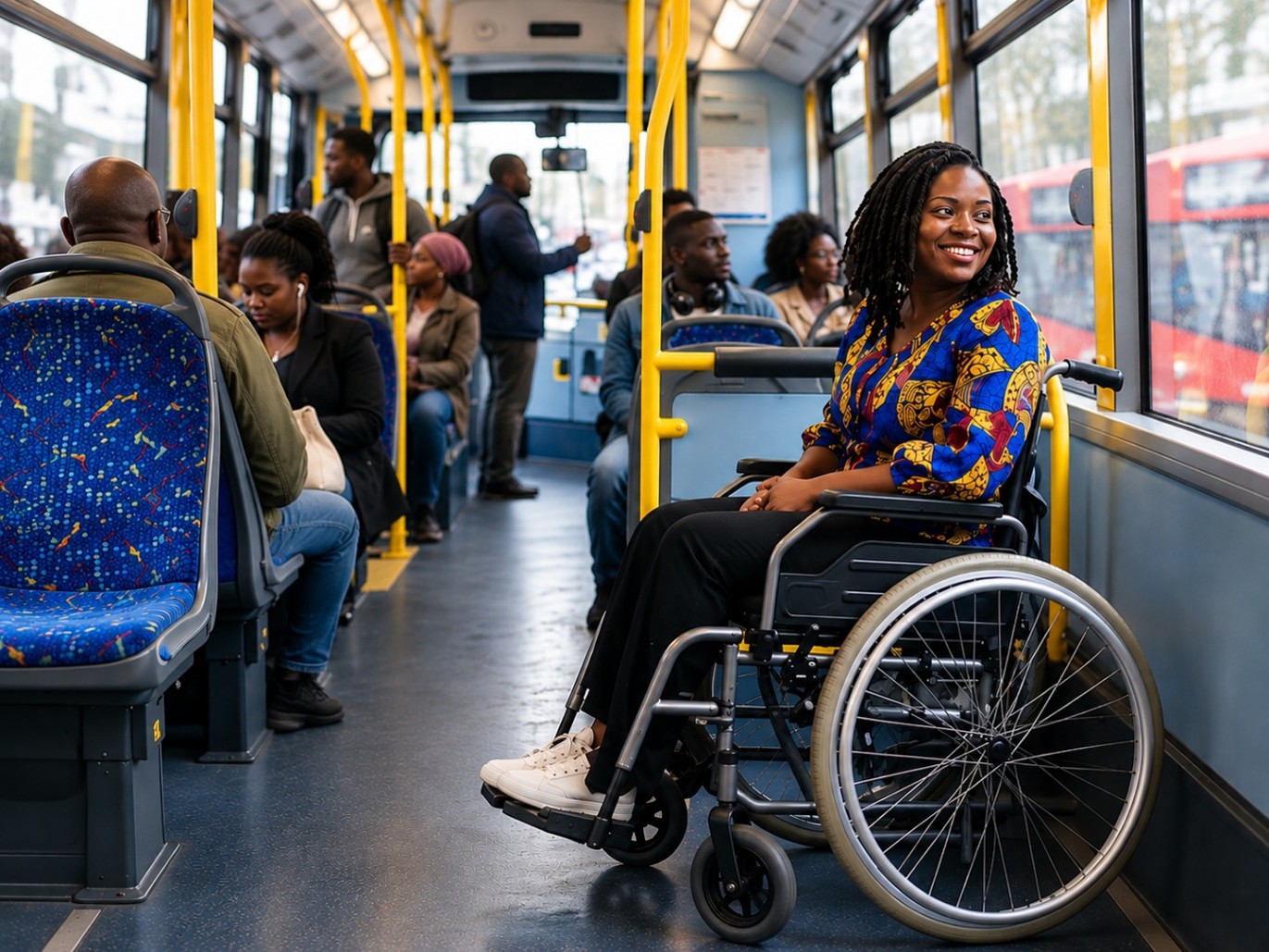
It also considers the entire passenger journey: from accessing travel information and reaching a station to boarding a vehicle, transferring between modes and arriving at a final destination. Its recommendations address infrastructure, operations, passenger information, vehicles, customer care and communications.
This holistic approach recognises that an accessible vehicle alone is not enough. Passengers must also be able to reach transport facilities safely, navigate stations with ease and access reliable information. The plan provides a framework to guide future interventions that will make Johannesburg's public transport network more inclusive.
The National Department of Transport has reviewed the completed plan, which will now proceed through the City's governance processes for consideration and approval. Implementing its recommendations will be critical to translating the plan into meaningful improvements for commuters.
Accessible public environments strengthen social interaction, support recreation and connect residents to workplaces, markets, healthcare facilities and educational opportunities. Well-planned pedestrian networks and public spaces also contribute to safer, better-connected neighbourhoods and more inclusive local economies.
Achieving these outcomes requires collaboration among municipal departments, transport operators, infrastructure planners, communities and organisations representing persons with disabilities. Their participation ensures that infrastructure responds to the real experiences and needs of the people who use it.
Through its infrastructure delivery and area-based development mandate, the JDA recognises that successful urban development is not only about constructing facilities but also about ensuring that people can access and benefit from them.
Written by Elias Nkabinde
17/11/2026
Recommended for you:
Joburg champions barrier-free mobility through universal design plan
Joburg to become inclusive City
City opens up for disabled
To stay informed about the latest developments in the City, connect with us on:
X: @CityofJoburgZA
Facebook: City of Joburg
Instagram: @CityofJoburg
TikTok: @CityofJoburg
Threads: @cityofjoburg
LinkedIn: City of Johannesburg
YouTube: https://www.youtube.com/@CityOfJoburgZA/videos

