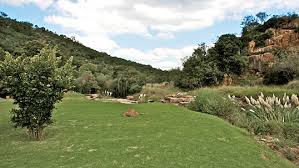
 Taking a leaf out of the book of Hindu washermen in Durban, scores of Zulu men migrated to the new mining town, where they washed the townsfolk's laundry in the Braamfontein Spruit. Back home, they ploughed their earnings into land. Taking a leaf out of the book of Hindu washermen in Durban, scores of Zulu men migrated to the new mining town, where they washed the townsfolk's laundry in the Braamfontein Spruit. Back home, they ploughed their earnings into land.
At the turn of the 20th century, Johannesburg had an unusual group of self-employed businessmen carving a place for themselves in the mad scramble for gold.
The AmaWasha, or Zulu washermen, formed a guild, which gave them privileges that blacks at the time could only dream of as they were systematically deprived of their rights to earn a living as they chose.
These entrepreneurs had an impressive presence - they wore turbans and marched into town in regimental style once a month, keeping perfect time and singing their old regiment songs. At the market square they would get down to a sociable imbizo after they'd renewed their monthly licence. By 1896, a decade after Joburg was established, there were more than 1 200 AmaWasha cleaning the town's laundry. But by 1914 the authorities had successfully marginalised them and the industry was largely dead.
The guild exempted the AwaWasha from carrying passes and got around a local by-law that prevented blacks from carrying weapons. It also allowed them to brew as much beer as they wanted for their own needs, according to Charles van Onselen in Studies in the Social and Economic history of the Witwatersrand, 1886-1914, New Nineveh (1982).
The guild allowed them to restrict entry into the AmaWasha and to determine the price they levied for washing the town's laundry.
Van Onselen says that despite the fact that these men managed to save fair sums of money, it was spent on land and cattle in the countryside and not used to buy laundry equipment. They did not keep up with the next phase of industrialisation when, for instance, the Randlords were on hand to supply the capital needed to take mining below ground.
"In a period otherwise characterised by growing African proletarianisation, however, even this form of re-investment was enough to ensure the washermen a significant measure of economic protection and in parts of rural Natal the AmaWasha came to constitute a conspicuously successful stratum in black society," Van Onselen says.
By this means the AmaWasha and their children avoided the movement from the land into the fast-growing black working classes that characterised the country at the beginning of the 20th century.
The AmaWasha had observed the turbaned Dhobis, India's washermen caste, doing Durban's washing in the Umgeni River in the 1870s. They soon adopted the same form of earning a livelihood, after noticing that the Dhobis could not meet the town's laundry demands.
When gold was discovered in Joburg in 1886 the AmaWasha, in particular the Mchunus and Buthelezis, moved up to the reef, along with a number of Hindu Dhobis, Van Onselen explains.
| 
