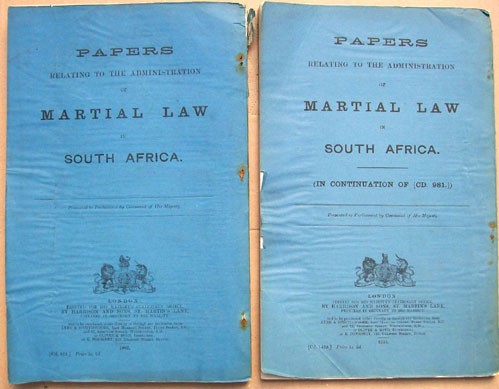
 On 10 March Smuts finally gave in and proclaimed martial law. Twenty-six burgher commandos were called out, in addition to nine regiments, to reinforce the citizen force regiments. On 10 March Smuts finally gave in and proclaimed martial law. Twenty-six burgher commandos were called out, in addition to nine regiments, to reinforce the citizen force regiments.
Trades Hall was raided and the strike and Communist Party leaders arrested and taken to the Fort. Fisher and his militant colleague, Henry Spendiff managed to escape the police net and Fisher took command of the revolt in the southern and western suburbs of Johannesburg.
According to Shorten, the strike leaders' plan was "to seize the central area of Johannesburg, the southern suburbs and the Reef centres. Then, while the rest of the country was paralysed by the general strike, they would hold out until the government was forced to resign and the employers accepted whatever terms were offered them". But the leaders were now in custody, the countrywide strike had not happened, and the Afrikaans commando leaders would not accept Fisher's leadership. As a compromise Fisher appointed a commander-in-chief, but he in turn hesitated, asking for time to think it over. Time was running out for the strikers. Government units were stationed at Benoni and Brakpan in the east, others were in position in the west, and still others were put in place in the north. In Benoni the Mine Workers Hall was bombed with 20 pound bombs. Fierce fighting occurred at Dunswart (12 soldiers died) and Ellis Park (8 soldiers died). The battle focused around Fordsburg's market square, where Fisher had his headquarters. The strikers dug themselves in around the square. As the net closed in Fisher was encouraged to raise the white flag, but he refused. On 14 March government forces battered down the doors of the market buildings on the square, freeing 50 policemen who had been held captive for three days.
Upstairs they found the bodies of Fisher and Spendiff - they had shot themselves rather than face arrest.
Remnants of this battle are still visible - the old Cottlesloe School at the top of the hill in 7th Avenue in Mayfair (now the New Nation School) was bombarded by 34 shells from two guns positioned in Empire Road and Jan Smuts Avenue. Marks are still visible on the walls of the building. From here the strikers retreated into Fordsburg.
The present post office in Central Road in Fordsburg used to be the police station - it was reduced to a shell after the battle around the square.
In Putney Road in neighbouring Brixton, the double-storey house of Pieter Marais is now a guest house called Under the Stairs. Marais, a shopkeeper, hid his family under the stairs of his house when the fighting became particularly fierce. Marais was believed to be hiding policemen in his house and was caught by the strikers and sentenced to death. On 11 March he was taken to a back street and shot.
Samuel "Taffy" Long was sentenced to death for Marais' killing. He was hanged together with three other men. While it now seems that the three were definitely guilty, at the time many believed Long was innocent. The other men were Carel Stassen who murdered two blacks; Herbert Hull and David Lewis who shot Lieutenant Twentyman Taylor of Military Intelligence.
| 
